
SAGE Congressional Briefing on LGBT Aging
The Issues
From the Older Americans Act to HIV and aging, from cultural competence to housing, and much more, a variety of issues uniquely affect LGBT elders. Learn about our lives. ▶
Our Priorities
- Ensuring that the Older Americans Act includes LGBT older people.
- Preserving and reforming Social Security.
- Extending Medicaid protections to same-sex couples.
- Integrating LGBT elders into health and health reform initiatives.
- Promoting LGBT cultural competence training and approaches.
- Strengthening supports for older adults with HIV.
- Enhancing the lives of transgender elders.
- Raising awareness and support for marginalized elders.
- Increasing funding for LGBT aging efforts, such as The SAGE Center.
Successes
▪ 2013 ▶
Marriage Equality and LGBT Older Adults. In March 2013, SAGE was proud to support longtime SAGE volunteer leader Edie Windsor by filing a brief in the Supreme Court of the United States in support of her constitutional challenge to the Defense of Marriage Act (DOMA). SAGE’s brief outlines the ways in which LGBT elders are especially hurt by discrimination against same-sex couples as embodied in DOMA. SAGE was joined in the brief by the American Society on Aging, National Hispanic Council on Aging, National Organization of Social Security Claimants’ Representatives, National Senior Citizens Law Center, and Southeast Asia Resource Action Center. Windsor v. United States highlights a number of ways that DOMA harms older legally married same-sex couples in areas such as Social Security, retirement benefits and health. In addition, to illustrate the real impact of DOMA on older couples, SAGE partnered with Freedom to Marry to collect and disseminate the stories of several couples whose committed relationships are not federally recognized—and how this has negatively impacted their lives.
HIV and Aging. Within a few years, nearly one in two people with HIV in this country will be age 50 and older, many of whom are LGBT. SAGE and our partner organizations, the AIDS Community Research Initiative of America (ACRIA) and Gay Men’s Health Crisis (GMHC), continue to advocate for, and raise awareness about, the policy barriers facing older adults with HIV. Our top priorities include asking the Centers for Disease Control and Prevention (CDC) to: recommend "routine" HIV testing for all adults; report surveillance data in five-year increments across multiple risk categories; and increase funding for targeted preventions for older adults, most notably among older MSMs (men who have sex with men) of color and older women of color, where the highest disparities are reported. In February 2013, SAGE and our partner organizations spoke with the Division of HIV/AIDS Prevention at CDC about our priorities, and the Division agreed to work with us to explore how to feature older adults in the CDC’s anti-stigma, “Let’s stop HIV together,” with a focus on New York City, the District of Columbia, and other potential locations throughout the country.
LGBT Elders Tell Their Stories. In January 2013, SAGE launched SAGE Story, an original, national digital storytelling program for LGBT older adults. This program aims to: develop LGBT older people as storytellers and spokespeople; collect a national library of online stories that portray the multiple aspects of aging as diverse LGBT people; infuse LGBT elder stories into mainstream media coverage; reduce isolation and create community among LGBT elders through local storytelling workshops in SAGE sites around the country; and bring an elder perspective to local and national advocacy initiatives on LGBT rights. SAGE Story garnered significant attention in its first few months—SAGE has partnered with Freedom to Marry and The Moth on storytelling projects, and was invited to present the program at national conferences for the American Society on Aging and the National Association of Nutrition and Aging Services. The launch of SAGE Story was generously supported by the AARP Foundation and Ford Foundation.
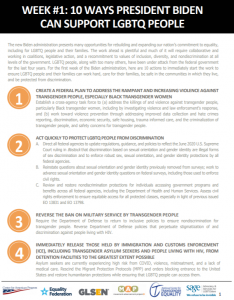
Transgender Older Adults and Social Security. In January 2013, in response to advocacy co-led by SAGE and the National Center for Transgender Equality (NCTE), the Leadership Council of Aging Organizations issued a letter (with 29 undersigned aging organizations) to the Commissioner of the Social Security Administration (SSA) urging SSA to: adopt evidentiary standards for changing gender markers on Social Security records that are consistent with those required for making the same changes to U.S. passports, and consider the elimination of gender data in all of its computer matching programs to further minimize the risk of unintentionally outing transgender people. If implemented, these changes would ease the burden on transgender people who, like most people, rely on Social Security cards for daily reasons—yet are often treated unfairly if their gender identities do not match the sex noted on their birth certificates. Having the support of LCAO—a consortium of more than 65 leading national aging organizations—shows that there is now support among many mainstream aging organizations for transgender elders.
▪ 2012 ▶
SAGENet Inspires and Builds Existing and New Affiliates. In November 2012, SAGE convened our affiliate leaders from around the country, hosting 36 SAGENet leaders from 20 affiliates and three potential new affiliates (Raleigh, NC; Madison, WI; Western Suburbs Chicago, IL). Over the course of three days, attendees participated in 16 professional development trainings, networking and social events. The speakers included a public panel of prominent Chicago-area providers, SAGE staff, affiliate leaders, constituents, and experts. Of the gathering, one person commented, "It was so instructive to meet both the existing and the potential groups and to see how much they are accomplishing. What an inspiration these folks are in their dedication to 'the cause' that we are all working toward. Of course, we are all at various stages of development and accomplishment, but to see the possibilities has been a true inspiration."
SAGE Brings Data Collection and LGBT Elder Health to the Forefront. Improving data collection on LGBT older people helps illustrate broader health disparities and supports patient-care when that data is collected as part of a patient intake process or through an electronic health record—actions that can spur policy change and improve LGBT older adults' health. In October 2012, SAGE attended the National Institute of Medicine (IOM) Data Collection meeting "Sexual Orientation and Gender Identity Data Collection in Electronic Health Records: A Workshop." SAGE made sure that IOM representatives heard the voices of LGBT older adults and understood the importance of data collection to our community. In December, IOM released a report entitled, "Collecting Sexual Orientation and Gender Identity Data in Electronic Health Records - Workshop Summary," citing SAGE in its advocacy for LGBT older adults.
A Bill for LGBT Elders in the OAA. In September 2012, Sen. Michael Bennett (D-CO) introduced the LGBT Elder Americans Act of 2012, which would amend the OAA to address the concerns noted above and provide equal treatment of LGBT older adults. Among the bill's proposals for the OAA is an amendment that would specify LGBT older adults as a population in "greatest social need," as well as an amendment that would permanently establish the National Resource Center on LGBT Aging, which provides LGBT cultural competence training to aging providers around the country. Other amendments include a proposal to increase funding for research and programs aimed at LGBT elders; a proposal to require long-term care ombudsmen to collect data relating to discrimination against LGBT older adults; and a proposal to enhance reporting requirements from area and state agencies on aging on their services to LGBT older adults.
THE ADMINISTRATION ON AGING ISSUES IMPORTANT NEW GUIDANCE THAT BENEFITS LGBT OLDER PEOPLE. In July 2012, after a year of policy guidance offered by SAGE—in collaboration with a number of partner organizations in Washington, DC, including the Human Rights Campaign—the Administration on Aging (AoA) issued guidance that empowers the country's Aging Network to consider LGBT older adults as a population of "greatest social need."
GEORGE STEWART, SAGE CONSTITUENT, NAMED A WHITE HOUSE CHAMPION OF CHANGE. In June 2012, George Stewart, a member of the NYC SAGE Communities Advisory Council, was officially selected as one of six White House Champions of Change thanks to a video submitted by SAGE to a national LGBT Pride Month video challenge.
A FEDERAL POLICY COALITION FOR MARGINALIZED OLDER PEOPLE. As one of the founding organizations in the Diverse Elders Coalition, in July 2012 SAGE co-released a policy report on the economic security issues facing elders of color and LGBT elders. To discuss the findings, SAGE and its six partner organizations in the coalition held a Congressional briefing on July 25. Additionally, SAGE helped launch an original news site on the issues facing our diverse communities.
SPOTLIGHT ON TRANSGENDER ELDERS. At the Philly Trans Health Conference in late May, SAGE and the National Center for Transgender Equality (NCTE) released a historic report on transgender aging. Improving the Lives of Transgender Older Adults: Recommendations for Policy and Practice offers more than 60 recommendations to policy makers, researchers, and aging and health care professionals on the issues facing transgender older adults. This report makes a significant contribution to the aging field, serving as the first of its kind to comprehensively examine this growing yet neglected population. This publication was informed by an advisory committee of 18 experts nationwide from different disciplines, which was convened as part of the Transgender Aging Advocacy Initiative in 2011, co-led by SAGE and NCTE.
WHITE HOUSE LGBT CONFERENCE ON AGING. On May 7, 2012, SAGE partnered with the White House to host the first ever White House LGBT Conference on Aging. The conference was held in Miami, Florida at the Center on Aging at the University of Miami, a close partner organization of SAGE. More than 150 advocates, community leaders, and members of the public attended the conference from both the local area and from around the country to discuss the health, housing, and security needs of aging members of the LGBT community.
SOCIAL SECURITY LEGISLATION AND PRESS CONFERENCE. In April 2012, SAGE worked with the LA Gay & Lesbian Center and the National Gay & Lesbian Task Force to host a Washington, DC press conference to announce the introduction of legislation by Congresswoman Linda Sanchez (D-CA) that would eliminate discrimination against same-sex couples in Social Security.
NATIONAL WHITE HOUSE TELECONFERENCE. On April 13, 2012, SAGE organized and hosted a national teleconference with the White House and the U.S. Department of Health and Human Services. Policy makers, constituents and allies joined the White House Office of Public Engagement, HHS and SAGE for this call to discuss the progress being made to support older Americans who are lesbian, gay, bisexual and/or transgender.
HIV AND AGING ADVOCACY. In April 2012, SAGE took part in an HIV and aging webinar aimed at community health centers around the country. The webinar was sponsored by the National Council on Aging in partnership with the Administration on Aging. A few weeks later, we led a federal HIV policy briefing for the "Connecting HIV and Aging Programs and Policies" gathering in New York, co-led by the Federation of Protestant Welfare Agencies and SAGE. And on July 25, SAGE, ACRIA (AIDS Community Research Initiative of America) and GMHC worked with the International AIDS Conference to host a satellite conference on global issues related to HIV and aging, funded by MAC AIDS Fund.
SAGE'S MULTI-STATE ADVOCACY INITIATIVE FOR MEDICAID PROTECTIONS. In February 2012, SAGE launched its Spousal Impoverishment Protections Initiative, a multi-year initiative to support advocates at the state level in extending spousal impoverishment protections under Medicaid to same-sex couples. This initiative builds on SAGE's leading advocacy on this issue since 2010.
▪ 2011 ▶
SAGE SPEAKS AT HUD LGBT ELDER HOUSING SUMMIT. In December 2011, the U.S. Department of Housing and Urban Development, in partnership with the Administration on Aging and the National Center for Lesbian Rights, held an LGBT Elder Housing Summit to discuss LGBT older adults' housing needs and existing efforts to fund and support current LGBT- affirming housing. At the daylong meeting, SAGE spoke on various panels, along with national leaders and aging professionals from a variety of organizations, including the Administration on Aging; the U.S. Department of Health and Human Services, Gay and Lesbian Elder Housing, the National Center for Transgender Equality, AARP, and the Beasley School of Law.
SAGE SPONSORS POLICY JOURNAL ISSUE DEDICATED TO LGBT AGING. In November 2011, SAGE and the National Academy on an Aging Society (the policy institute of the Gerontological Society of America) released the first-ever issue of the acclaimed Public Policy & Aging Report (PPAR) dedicated to LGBT aging. PPAR is distributed to thousands of thought leaders in the aging field, and explores policy issues generated by the aging of American society.
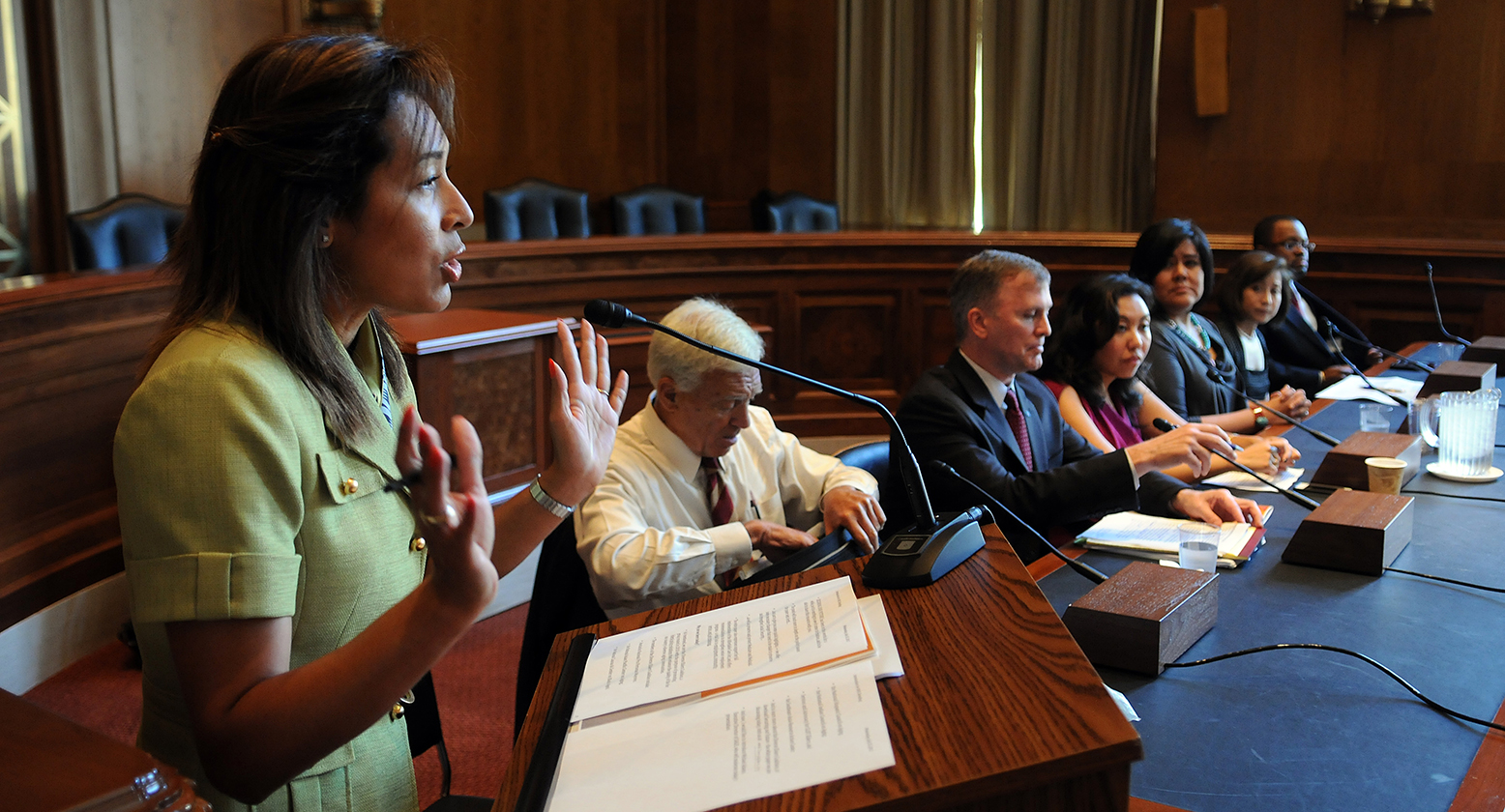
SAGE SPEAKS AT CONGRESSIONAL BRIEFING ON LGBT AGING. On November 9, SAGE Executive Director Michael Adams spoke at a Congressional briefing to discuss the current policy issues facing LGBT older adults. Sponsored by the Congressional LGBT Equality Caucus and Congress members Tammy Baldwin, Barney Frank, Jared Polis, and David Cicilline, the briefing was attended by nearly 75 representatives from Congress as well as national aging and LGBT organizations. The briefing also featured the release of The Aging and Health Report: Disparities and Resilience among Lesbian, Gay, Bisexual, and Transgender Older Adults by lead researcher Dr. Karen Fredriksen-Goldsen. Other speakers at the briefing included Kathy Greenlee, Assistant Secretary for Aging, U.S. Department of Health and Human Services; and Jeff Krehely, Director of the LGBT Research and Communications Project, Center for American Progress.
SAGENET GATHERING AND FIRST-EVER NATIONAL ADVOCACY INSTITUTE. In October 2011, SAGE held its annual SAGENet Gathering, hosting its affiliates in St. Louis, MO. The gathering included trainings and sessions on how to build effective coalitions; a multigenerational conversation dealing with ageism; a section on bridging racial justice and LGBT issues (led by Rinku Sen, Executive Director of the Applied Research Center, the country's premier think tank on race); a "policy café" on current policy issues such as the reauthorization of the Older Americans Act and HIV and Aging; and a half-day advocacy institute with the Williams Institute on Spousal Impoverishment Protections. In addition, SAGENet leaders were able to share their program ideas with each other throughout the two days, and most of them stayed in St. Louis for two additional days to attend the "Train the Trainers" session to master the National Resource Center on LGBT Aging's curriculum. In total, 35 people attended, and evaluations of the gathering showed that the gathering was a resounding success.
THE AGING FACE OF HIV. SAGE Executive Director Michael Adams spoke at the first White House Conference on HIV and Aging, held on October 27, 2011, which brought together leading advocates from around the country to discuss program interventions and policy solutions that will better support the first generation of older adults to live and age with HIV/AIDS in large numbers. Research shows that by 2015, the majority of people with HIV in the United States will be age 50 and older.
SAGE WORKS WITH FEDERAL AGENCIES TO SUPPORT LGBT ELDERS. As part of our partnership with the National Gay and Lesbian Task Force, SAGE and other members of the Task Force's New Beginning Initiative met with the U.S. Department of Health and Human Services in July 2011 to discuss how HHS can support LGBT older adults through enhanced non-discrimination policies, better research and data collection, cultural competence trainings, updated forms and broad definitions of "family," and designations of "greatest social need" through the Older Americans Act. SAGE and the National Resource Center on LGBT Aging are also working with NBI and the Centers for Medicare and Medicaid Services to develop an online tool created by CMS that would train staff working in long-term care facilities nationwide on the rights and needs of LGBT elders.
SAGE ADVOCATES ON HIV ISSUES AT FEDERAL LEVEL. In July 2011, as part of our HIV and aging advocacy collaborative with GMHC and ACRIA, SAGE met with various leaders at the U.S. Department of Health and Human Services to discuss the importance of funding interventions and reforming policies that address an aging population with HIV/AIDS.
HEALTH SUPPORTS FOR LGBT ELDERS. In June 2011, SAGE (as part of the Diverse Elders Coalition) successfully advised the National Prevention, Health Promotion, and Public Health Council—an entity established through health care reform—on its National Prevention Strategy to make it more inclusive of diverse older people. The coalition first submitted a research memo in early 2011 to the National Prevention Council that detailed the numerous health disparities facing elders of color and LGBT elders. A few months later, the coalition followed up with six precise recommendations. When the National Prevention Council released its National Prevention Strategy in June 2011, the coalition saw several of its recommendations integrated into the administration's large-scale, multi-year health plan, including various references to age, sexual orientation, cultural and linguistic competence, and the need to address health disparities—all of which made this preeminent document more responsive to elders of color and LGBT elders.
FEDERAL VICTORY ON MEDICAID PROTECTIONS. After years of advocacy led by SAGE in partnership with Lambda Legal and the National Gay and Lesbian Task Force, in April 2011 the U.S. Department of Health and Human Services announced that it would notify states about their abilities to treat same-sex couples the same as married heterosexual couples when it comes to protection from "spousal impoverishment" under Medicaid. In June, the Centers for Medicare & Medicaid Services provided this guidance to the state Medicaid agencies—and SAGE began working to launch a state-by-state national project to extend these protections to same-sex couples. In February 2012, SAGE launched its Spousal Impoverishment Protections Initiative.
SAGE JOINS DIRECT CARE CAMPAIGN. In April 2011, SAGE joined the Caring Across Generations campaign, led by the National Domestic Workers Alliance and Jobs with Justice, as part of an effort to enact legislation that would create millions of well-paid jobs in direct care work, enforce labor standards for hundreds of thousands of direct care workers, provide a path to legalization, and career opportunities so that economic uplift becomes a reality. SAGE is bringing its perspective on the unique caregiving realities of LGBT elders, many of whom rely on friends and other "families of choice" for caregiving support.
LEADING AGING ORGANIZATIONS SUPPORT LGBT ELDERS IN FEDERAL POLICY. April 2011, SAGE helped move eight LGBT-specific recommendations through the official consensus document on the Older Americans Act reauthorization for the Leadership Council of Aging Organizations (LCAO), a 65-member association comprising the country's leading aging organizations. SAGE is the only LGBT organization represented on the council. The recommendations included defining "greatest social need" and "minority" in the OAA to explicitly name LGBT older adults, as well as urging that all future data collection efforts, project assessments and reporting requirements offered through OAA track LGBT older adults.
SAGE RELEASES POLICY BRIEF ON OLDER AMERICANS ACT. In March 2011, SAGE released a new policy brief on the pending reauthorization of the Older Americans Act (OAA). This timely report discussed how the Act could address the health and social barriers LGBT older adults face when seeking services and programs, and recommendations for making the act more LGBT- affirming so that all older adults can age successfully and with dignity.
▪ 2010 ▶
PUBLIC EDUCATION CAMPAIGN ON SOCIAL SECURITY. SAGE joins the National Hispanic Council on Aging and the Southeast Asia Resource Action Center to launch a joint community education and engagement project on Social Security, helping to make heard an often marginalized voice in the public debate on Social Security. The materials are produced in multiple languages and published in both ethnic media and LGBT media. The project is funded by the National Academy for Social Insurance. A month later, in the midst of President Obama's Bipartisan National Commission on Fiscal Responsibility and Reform, and the looming release of a controversial plan that could jeopardize the future of Social Security, SAGE issues a media release about the program's importance to diverse older people.
THE FUTURE OF AGING IS IN OUR HANDS. On November 13-15, 2010, SAGE held its first-ever national conference created by, for and about LGBT older adults, "The Future of Aging Is in Our Hands." This unique conference brought together LGBT older adults from around the country for three days of interactive workshops, exciting plenary sessions and multiple networking opportunities, providing LGBT older adults with the resources they need to advocate on their own behalf—and reshape the future of LGBT aging.
CONGRESSIONAL BRIEFING ON LGBT ELDERS AND ELDERS OF COLOR. In September 2010, as part of the National Hispanic Council on Aging's national conference in Washington, DC, SAGE joined the National Caucus and Center on Black Aged, the National Hispanic Council on Aging and the Southeast Asia Resource Action Center at a joint legislative briefing to discuss how reauthorization of the Older Americans Act can help improve supports for older people in our communities.
HOSPITAL RIGHTS FOR LGBT FAMILIES. SAGE applauded President Obama's historic April memorandum directing the Department of Health and Human Services to require that hospitals accepting Medicare and Medicaid dollars—nearly every hospital in America—recognize a patient's "designated partner" in terms of visitation and health consultation rights.
A BRIEFING FOR CONGRESS ON OUR LIVES. SAGE spoke at an April Congressional briefing on LGBT issues led by the National Gay and Lesbian Task Force—a precursor to SAGE's gathering of the National LGBT Aging Roundtable. Nearly 60 people attended the briefing, including the legislative directors of Representatives Tammy Baldwin (D-WI), Jerrold Nadler (D-NY) and Jan Schakowsky (D-IL), and representatives from the National Association of Area Agencies on Aging, National Association of State Units on Aging and the National Senior Citizens Law Center, among many others.
SOCIAL SECURITY AND LGBT ELDERS. SAGE joined the "Strengthen Social Security" campaign, led by a coalition of national organizations that have come together to bolster the Social Security system and challenge attempts to cut the program's benefits. In addition to supporting a unified effort that would preserve a critical safety net for older Americans, SAGE is raising awareness on how Social Security rules deny spousal benefits, survivor benefits and death benefits to LGBT older adults.
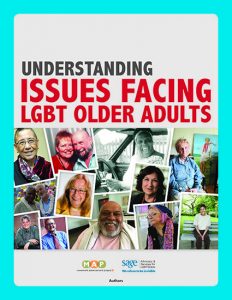
A BLUEPRINT FOR LGBT AGING ADVOCACY. In March 2010, SAGE released its report (co-authored with the Movement Advancement Project), Improving the Lives of LGBT Older Adults, at the American Society on Aging's national conference in Chicago. The groundbreaking report—in partnership with The American Society on Aging, the Center for American Progress (CAP) and the National Senior Citizens Law Center— is the first major written collaboration between LGBT advocacy organizations and national aging organizations to comprehensively examine the issues facing LGBT older adults. In November 2010, SAGE works with MAP and CAP to release a variety of companion issue briefs to the report.
A FEDERAL PRESENCE FOR LGBT ELDERS. SAGE opened an office in Washington, DC, effectively launching a federal program to bring an LGBT aging voice to the policy discussions on aging—and improve the lives of LGBT older people. SAGE's office is located at the national headquarters of the National Caucus and Center on Black Aged, Inc.
Partnership and Coalitions
SAGE is part of numerous partnerships and coalitions that help advance our policy priorities for LGBT elders. We are the only LGBT organization on the influential Leadership Council of Aging Organizations; a founding member of the Diverse Elders Coalition; the lead on the National LGBT Aging Roundtable; and a member of the New Beginning Initiative, led by the National Gay and Lesbian Task Force, and the National Coalition for LGBT Health. Additionally, our partnerships with groups such as the National Academy on an Aging Society, the Movement Advancement Project, the Center for American Progress, the National Center for Transgender Equality and the Williams Institute, among others, have helped us produce critical policy reports on our issues. Read our many policy publications. ▶
Our Multi-State Advocacy
SAGE supports our affiliates in leading advocacy at the local and state levels, across a range of policy concerns important to LGBT elders in their communities. Additionally, we coordinate national initiatives that work across multiple states, such as the Spousal Impoverishment Protections Initiative. Learn about spousal impoverishment. ▶
Our Supporters
SAGE would like to thank the following foundations for their generous support of our advocacy efforts: the Arcus Foundation, the Atlantic Philanthropies, the David Bohnett Foundation, the Ford Foundation, the Gill Foundation and MAC AIDS Fund. Read more about SAGE's other supporters. ▶
To learn more about SAGE's federal advocacy efforts, please contact Aaron Tax, Director of Federal Government Relations, at atax@sageusa.org.